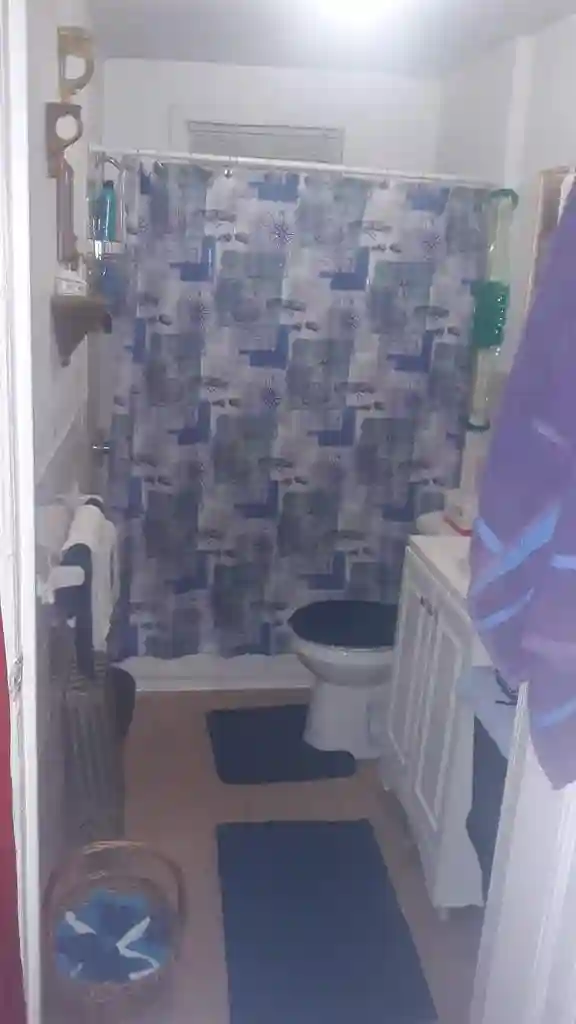
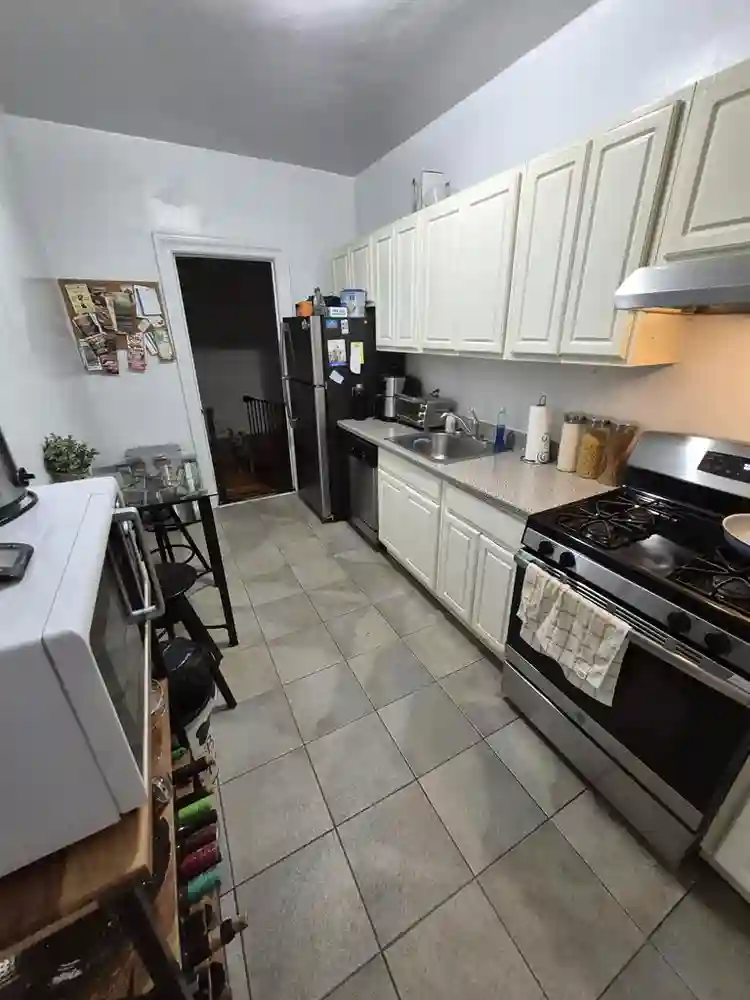
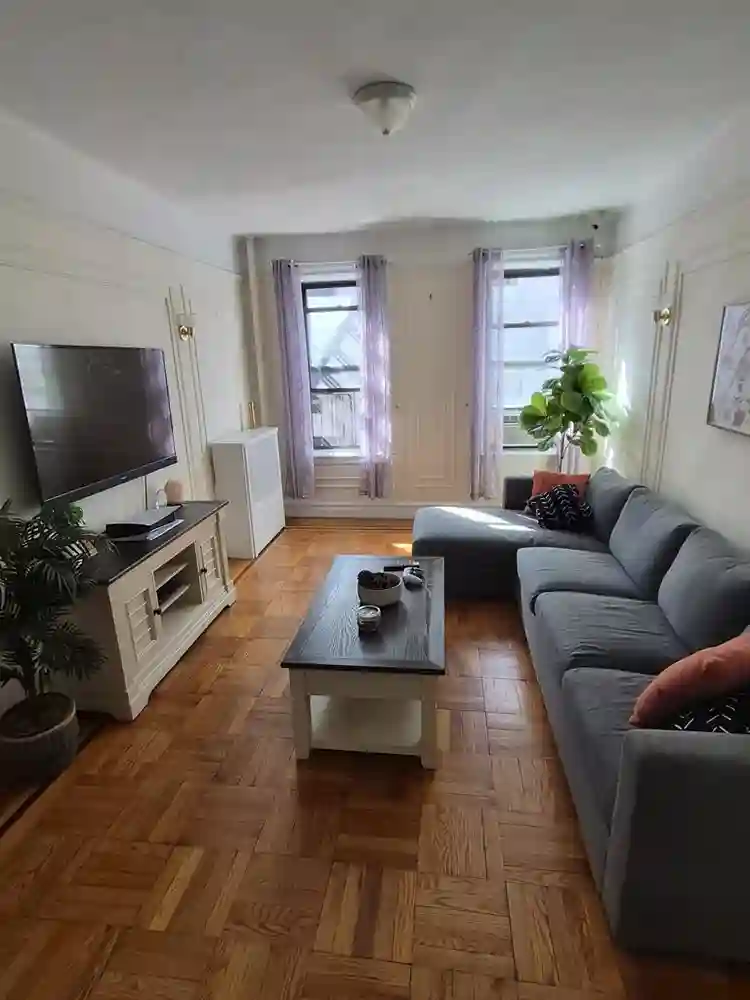
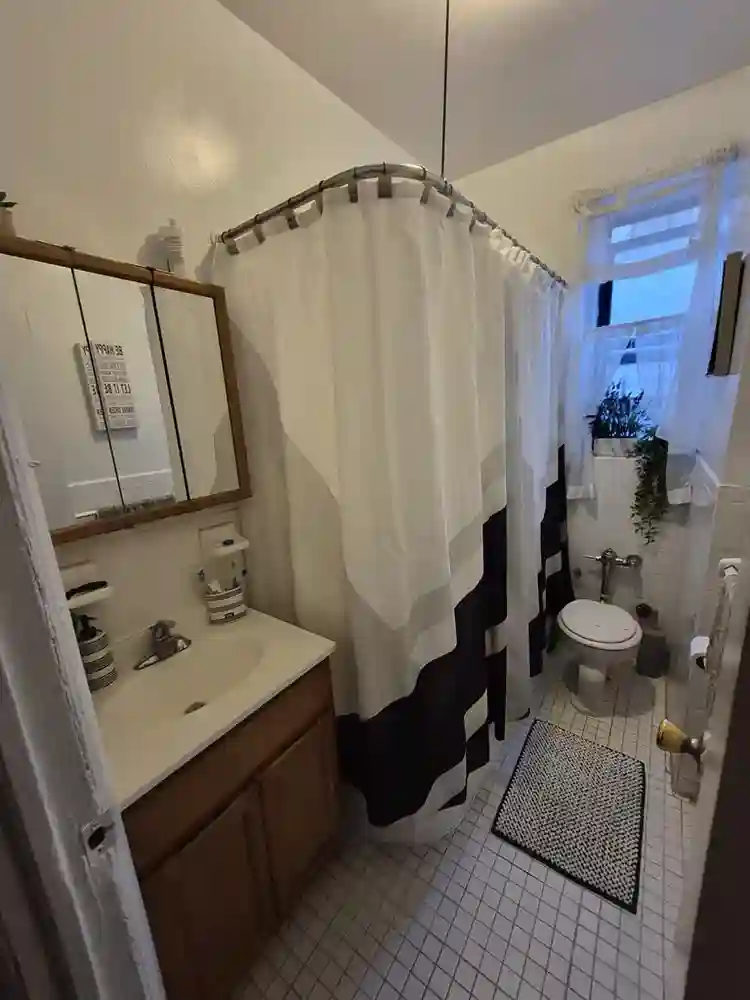
How many rooms for rent are available in Cobble Hill right now?
This is a small neighborhood by design, and it was made that way deliberately. The Cobble Hill Historic District covers 22 blocks and more than 850 buildings between Atlantic Avenue, Degraw Street, Court Street and Hicks Street, nearly all of them nineteenth-century row houses divided into two or three floors. Nothing taller has gone up inside it in over fifty years, so the number of front doors is fixed and the room supply moves entirely on who is leaving. Roomster has 89 rooms posted here, almost all inside ZIP 11201.
How much does a room for rent in Cobble Hill cost per month?
Expect $1,500 to $2,300 a month, which follows from what the apartments cost: local two-bedrooms are quoted between $4,504 and $6,200, so a half-share sits well above $2,250 and only a bedroom in a three-person household lands under two thousand. You can find rooms under $1,700 a month toward the Columbia Street side west of Hicks, at the Atlantic Avenue end, and on the Degraw Street blocks where Cobble Hill runs into Carroll Gardens. The most expensive rooms sit on the quiet interior streets between Clinton and Henry, where the row houses are largest and turn over least.
Can I rent a room on Warren Place, the workers' cottages?
Very rarely, and the reason is a piece of housing history worth knowing. In 1878 the philanthropist Alfred Tredway White built 34 Gothic Revival cottages along a pedestrian mews running between Warren and Baltic Streets, each one about 11 feet wide, facing a shared private courtyard. They were built as homes for working families under his motto philanthropy plus 5 percent, the idea that decent housing could pay a modest return, and they are still single-family houses today. That means they come to market whole, as a house to rent or buy, not room by room. The same applies to White's Home Buildings and Tower Buildings on Hicks Street, which remain apartments rather than shares.
Which Cobble Hill blocks have the cheapest rooms to share?
Within 22 blocks the differences are genuine but geographic rather than dramatic. The cheapest rooms sit at the edges: west of Hicks Street toward the Columbia Street Waterfront District, which the expressway cut off from the rest of the neighborhood, and along the Atlantic Avenue frontage at the northern boundary, where the traffic and the commercial strip take money off the rent. Rooms get cheaper again as you cross Degraw Street southward. The premium blocks are the quiet interior stretches of Clinton, Henry, Amity and Congress Streets. Since the whole district is walkable in fifteen minutes, moving your search to the edges costs you almost nothing in convenience.
Are Cobble Hill rooms for rent near the subway?
Unusually well served for somewhere this small. The F and G at Bergen Street sit under a five-minute walk from much of the district and put Manhattan two or three stops away, and the northern blocks are within walking distance of the Borough Hall and Court Street complex, which carries the 2, 3, 4, 5 and R. That means a renter here can reach Lower Manhattan, Midtown and Downtown Brooklyn without ever changing their routine, which is a large part of why rents hold up. When you compare two rooms, the honest question is not whether there is a train nearby but whether you would use Bergen Street or walk north to Borough Hall, because that decides your morning.
Is a room cheaper in Cobble Hill or in Carroll Gardens next door?
Carroll Gardens is slightly cheaper, but less than most people expect, and the two share a boundary at Degraw Street with the same F and G service. Rooms in Cobble Hill run roughly $1,500 to $2,300 against $1,300 to $2,000 immediately south, a gap of a couple of hundred dollars rather than a different price bracket. What you are paying the difference for is the shorter walk to Borough Hall and Brooklyn Heights. If your budget is the binding constraint, the bigger saving is crossing west of Hicks Street toward Columbia Street rather than crossing south, since the expressway does more to rents here than the neighborhood line does.