How many apartments for rent are available in Cobble Hill right now?
Fewer than the location would suggest, and that is the result of a deliberate fight rather than an accident. The Cobble Hill Association, founded in 1958, became one of the city's earliest and most effective neighborhood groups by opposing urban renewal schemes that would have cleared brownstones for high-rises, and the campaign ended in landmark designation on December 20, 1969, later extended in 1988. The district's 850-plus buildings have been fixed in scale ever since, so almost every apartment for rent is a floor of a nineteenth-century row house. Roomster currently lists 70 of them.
How much does it cost to rent an apartment in Cobble Hill?
The published figures disagree sharply here because so few units are on the market at once. One-bedrooms are quoted from $3,453 to $4,275 and two-bedrooms between $4,504 and $6,200, with the median across all sizes reported near $4,870, while studios have been quoted as low as $2,176. That low end is not a mistake, it reflects the small rear and garden-level units carved out of row houses, which are genuinely cheaper and genuinely smaller. You can find one-bedrooms under $3,400 a month west of Hicks Street toward Columbia Street, along the Atlantic Avenue frontage, and on the blocks approaching Degraw Street.
What is being built on the old Long Island College Hospital site?
Housing, and it remains the most contested development question in the neighborhood. Long Island College Hospital closed on August 30, 2014, after SUNY Downstate, which had bought it in 2011, moved to sell the site. The property went to the developer Fortis, with a condition that an emergency department continue on the site under NYU Langone. The proposals put forward involved residential towers reaching as high as forty stories: one plan of roughly 790,000 square feet of market-rate housing buildable under existing zoning, and a larger 1.4 million square foot version that would have included affordable housing and a school site. Local opposition has been sustained, so treat any timeline as unsettled and check the current status before you factor it into a lease decision.
What does the historic district mean for an apartment for rent in Cobble Hill?
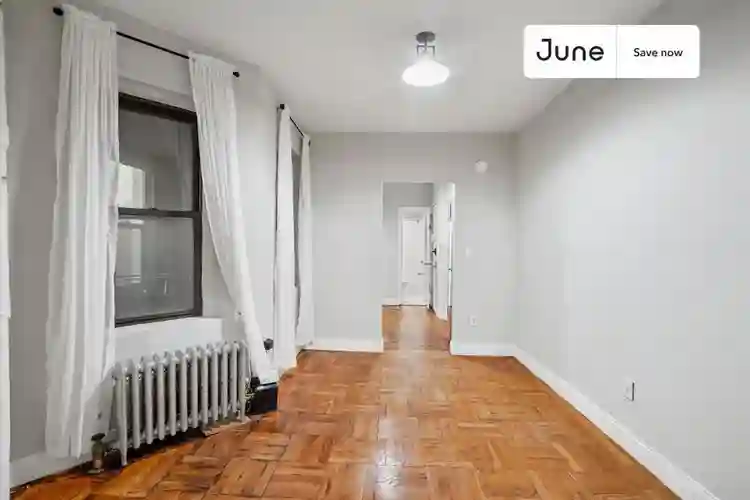
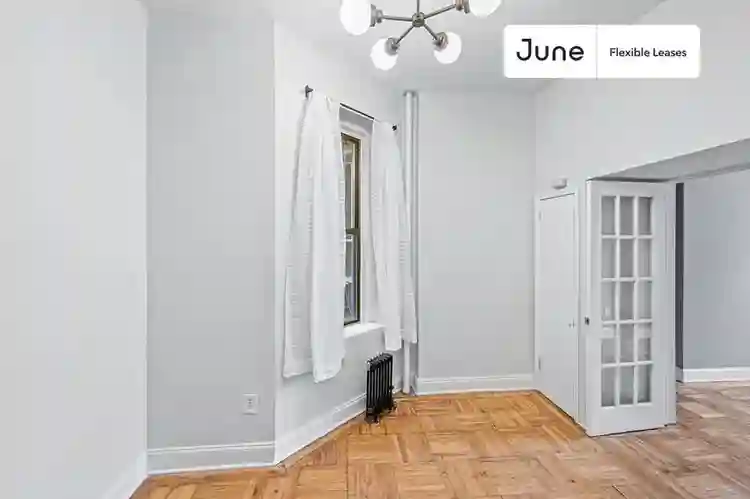
It shapes what the apartment is, not who may rent it. The district runs from Atlantic Avenue down to Degraw Street and from Court Street west to Hicks, and the buildings inside it are largely Greek Revival row houses alongside early Italianate and Romanesque Revival work, with Gothic churches by Minard Lafever and Richard Upjohn punctuating the blocks. Landmark rules govern exterior alterations, so facades stay consistent while interiors vary enormously. In practice you should expect a walk-up of three or four floors, no elevator, period proportions with high ceilings and deep rooms, and original windows that are beautiful and rarely efficient. Ask which floor and how the heat is arranged before anything else.
Are there apartments for rent near Cobble Hill's transit and commute routes?
All of them are, which lets you choose on the apartment rather than on the commute. Bergen Street puts the F and G within a few minutes of most of the district, and the F reaches Manhattan in two or three stops. The northern blocks are close enough to walk to Borough Hall and Court Street for the 2, 3, 4, 5 and R, which is why apartments north of Amity Street tend to ask a little more. The genuine trade-off in this neighborhood is not transit but the western edge: crossing Hicks Street toward Columbia Street lowers the rent noticeably because the expressway separates those blocks from everything else, while leaving you the same trains.
Are there any cheap apartments for rent in Cobble Hill?
Cheap is relative in a district where the median across all sizes runs near $4,870, but the spread is wider than that figure implies and the bottom of it is worth understanding. Studios have been quoted from about $2,176, which reflects the small garden-level and rear units created when these row houses were divided, and those are the genuinely affordable entry point here. Above them, one-bedrooms start around $3,453. The practical strategy is to accept less space rather than a worse location, since a compact rear unit on a quiet interior block often costs less than a larger apartment on Atlantic Avenue and puts you in the part of the neighborhood people actually want to be in.